
Watch video summary
Schedule a Free Consultation Call Today
Discover how we can help you overcome, the latest payment challenges.
Introduction
Payment systems have traditionally depended on centralized infrastructure to authorize and settle transactions. Every payment request typically travels through multiple layers before it is approved, processed, and recorded. While this model remains effective, it introduces latency, increases dependency on connectivity, and exposes transaction data across multiple systems.
What Edge-Device Settlements Mean in Financial Systems?
Moving Payment Processing Closer to the User
Edge-device settlements shift part of the payment logic closer to where the transaction originates. Instead of sending all data to external servers for validation, the device itself can perform initial checks, verify conditions, and prepare the transaction for settlement.
Role of Secure Hardware and On-Device Capabilities
Modern devices include secure hardware components designed specifically for handling sensitive operations. Secure enclaves, biometric authentication systems, and device-level encryption allow payment processes to occur safely within the device environment.
Why Edge-Device Settlements Are Gaining Industry Attention
Demand for Faster Transaction Execution
Real-time payment systems have set new expectations for transaction speed. Users expect payments to be completed instantly, without delays or repeated verification steps. Edge-device settlements support this expectation by reducing the time required for transaction validation.
When part of the processing happens locally, the system can confirm transaction readiness almost immediately. This is especially valuable in high-frequency payment environments where speed directly impacts user experience.
Increasing Focus on Data Privacy and Security
Data privacy has become a key concern in modern financial systems. Every time payment data moves across networks, there is potential exposure. By processing more information directly on the device, edge-device settlements reduce the need to transmit sensitive data externally.
How Edge-Device Payment Processing Works
Local Transaction Validation and Authorization
In an edge-device settlement model, the device performs initial validation of the transaction. This may include verifying user authentication, checking transaction parameters, and confirming that predefined conditions are met.
Once validated, the transaction is prepared for execution and sent to the payment network for final settlement. Because much of the verification has already occurred locally, the overall process becomes more efficient.
Synchronization With Central Payment Systems
Even though processing occurs on the device, synchronization with central systems remains essential. Transactions must still be recorded, reconciled, and monitored within financial infrastructure.
Practical Applications of Edge-Device Settlements
Offline and Low-Connectivity Payment Environments
One of the most valuable use cases for edge-device settlements is in environments with limited connectivity. When network access is unstable, traditional payment systems may fail or delay transactions.
Mobile Wallet and Contactless Transactions
Mobile wallets already rely on device-level capabilities for authentication and transaction initiation. Edge-device settlements extend this concept by allowing more of the payment logic to occur locally.
Governance, Security, and Compliance Considerations
Device Integrity and Risk Management
For edge-device settlements to function effectively, devices must be secure and trustworthy. Payment providers must ensure that device integrity is maintained and that local processing cannot be manipulated.
Security frameworks must validate that only authorized devices can perform payment-related operations, reducing the risk of fraudulent activity.
Regulatory Compliance and Auditability
Even with local processing, payment systems must meet regulatory requirements. Transactions must remain auditable, and financial records must be complete and accurate.
The Future of Distributed Payment Processing
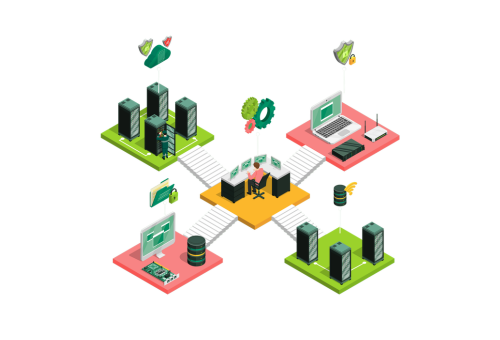
Payment infrastructure is gradually shifting toward more distributed models. As devices become more capable, they will play a larger role in transaction processing. Edge-device settlements represent a step in this direction, enabling faster, more efficient payment execution while maintaining control and oversight.
At Facilero, we believe this evolution reflects the broader need for payment systems that adapt to modern digital environments. As businesses rely more on mobile platforms and real-time transactions, infrastructure must support both speed and security.
Conclusion
Edge-device settlements introduce a practical approach to improving payment speed, security, and efficiency. By processing key parts of transactions directly on user devices, payment systems can reduce latency, limit data exposure, and support more reliable transaction flows. As digital payment ecosystems continue to evolve, edge-based processing is likely to become an important component of modern financial infrastructure.
How Can Facilero Help You?
Payments are one of those things that either run quietly in the background or suddenly become a problem when something doesn’t work as expected. And let’s be honest, most businesses don’t have time to deal with delays, failed transactions, or unclear payment flows. What they need is consistency. Systems that behave the same way every day, no surprises, no unnecessary friction.
At Facilero, we focus on helping businesses bring that level of stability into their payment operations. It’s not about overcomplicating things or adding layers that slow processes down. It’s about making sure transactions move reliably, data is handled properly, and financial operations stay predictable even as volumes grow or business models evolve.
Supporting Reliable Payment Operations
Every business operates differently, and payment needs rarely stay the same over time. Some companies handle high transaction volumes, others deal with complex payment relationships, and many operate across multiple regions or platforms. That’s where a well-structured payment setup really matters.
Facilero works with businesses to ensure their payment infrastructure supports day-to-day operations without creating bottlenecks. When payments are processed efficiently, reconciliation becomes easier, reporting is clearer, and teams can focus on what actually drives the business forward.
A Practical Approach That Works in Real Conditions
There’s no one-size-fits-all approach in payments. What works for one company might not work for another, and that’s perfectly fine. The key is having a partner that understands how to adapt payment solutions to real operational needs rather than forcing rigid setups.
At Facilero, we take a practical view. Keep things clear, keep them efficient, and make sure the system holds up under real-world conditions. Because at the end of the day, payment infrastructure should support your business, not slow it down.
If you’re looking to bring more clarity and reliability into your payment operations, it’s worth having a conversation. Contact us now and let us help take your business to the next level!
Get A Free Consultation
Book a free call with us to discuss how we can help you expand in new regions, scale, and get the cash flowing in your business.