
Watch video summary
Schedule a Free Consultation Call Today
Discover how we can help you overcome, the latest payment challenges.
Introduction to Invisible Card Numbers in Digital Payments
Card-based payments remain a central pillar of global commerce, but the way card credentials are handled is changing rapidly. Traditional card numbers were designed for an era where transactions were initiated manually and exposure was limited. In today’s digital environments, where payments occur across websites, mobile applications, subscriptions, and embedded services, visible card numbers introduce unnecessary risk.
Invisible card numbers represent a modern response to this challenge. Instead of transmitting or storing the actual card number, payment systems rely on tokenized credentials that function exactly like a card but are never displayed or exposed in readable form. The merchant, platform, or application processes a transaction without ever seeing the real card details.
At Facilero, we view invisible card numbers as a practical evolution rather than a disruptive concept. They address long-standing security weaknesses while preserving the familiar structure of card payments. As payment ecosystems become more interconnected, reducing the visibility of sensitive credentials is no longer optional; it’s essential.
Why Invisible Card Numbers Are Gaining Industry Adoption
Limitations of Exposed Card Credentials
Visible card numbers create multiple points of vulnerability. When card details are entered into checkout pages, stored for future use, or passed through third-party systems, they become attractive targets for misuse. Even when systems are compliant, the mere presence of readable card data increases exposure.
Data breaches, credential reuse, and unauthorized storage are often linked to environments where card numbers remain visible at some stage of the transaction flow. Once exposed, these credentials can be exploited repeatedly until replaced. This creates ongoing risk for cardholders, merchants, and payment providers alike.
Invisible card numbers reduce this exposure by design. Since the actual card number never appears, there is nothing meaningful to capture or reuse outside the intended transaction context.
Shift Toward Token-First Payment Architecture
Payment systems are increasingly being built with tokenization at their core. Instead of treating tokens as an optional security layer, modern architectures assume that real card data should remain isolated within secure network boundaries.
Invisible card numbers fit directly into this model. They act as functional stand-ins for real cards, enabling authorization, settlement, and reconciliation without sharing sensitive details. This shift supports cleaner system design and simplifies risk management across complex payment flows.
How Invisible Card Numbers Work?
Token Generation and Mapping to Card Accounts
An invisible card number is created by generating a token that is linked to an underlying card account. This token has no intrinsic value outside the payment network that recognizes it. To merchants and platforms, it appears as a valid payment credential, but it cannot be reverse-engineered into the original card number.
The mapping between the token and the actual card is maintained securely within controlled systems. This separation ensures that even if a token is intercepted, it cannot be used outside its intended scope or context.
Authorization and Transaction Processing Flow
During a transaction, the invisible card number is submitted for authorization just like a traditional card number. The payment network validates the token, resolves it to the underlying account, and processes the transaction using standard authorization logic.
From the merchant’s perspective, nothing changes operationally. From a security standpoint, however, the risk profile is significantly improved. The merchant never handles real card data, reducing exposure and compliance burden.
Use Cases for Invisible Card Numbers
Online Commerce and Stored Payment Methods
Invisible card numbers are especially valuable in online commerce, where card details are frequently stored for repeat purchases. By using tokenized credentials, platforms can offer convenience without retaining sensitive information.
For example, an online retailer can support one-click payments using invisible card numbers. Even if the platform’s database is compromised, the stored tokens cannot be used elsewhere, limiting the impact of an incident.
Subscriptions, Embedded Payments, and APIs
Subscription services and API-driven payment flows benefit from invisible card numbers because they reduce long-term credential exposure. Recurring charges can be processed reliably without keeping real card numbers on file.
In embedded payment environments, such as software platforms that integrate billing directly into workflows, invisible card numbers allow payments to occur seamlessly while maintaining strict separation between application logic and sensitive financial data.
Security, Compliance, and Risk Reduction Benefits
Minimizing Data Exposure and Fraud Risk
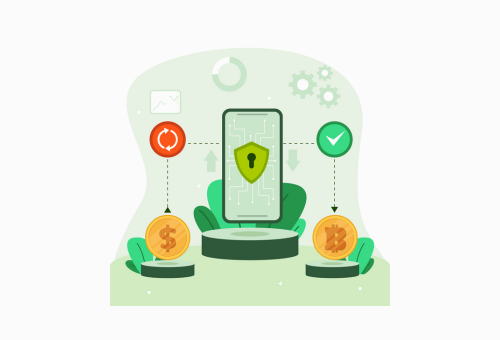
The most immediate benefit of invisible card numbers is reduced data exposure. Since real card numbers are never shared, the potential impact of breaches, leaks, or misuse is significantly lower.
This also simplifies fraud analysis. Tokens can be scoped to specific merchants, transaction types, or usage limits, making abnormal behavior easier to detect and contain.
Alignment With Regulatory and Network Standards
Tokenization supports compliance by reducing the amount of sensitive data that systems must handle. Fewer environments fall within strict data protection scopes, easing audits and operational overhead.
At Facilero, we see this alignment as a key advantage. Invisible card numbers allow businesses to strengthen security while maintaining compatibility with established card payment frameworks.
Future Outlook for Invisible Card Numbers
Invisible card numbers are likely to become the default credential for digital card payments. As transactions continue to move into automated, embedded, and device-driven contexts, visible card numbers will feel increasingly outdated.
Future implementations may include dynamic tokens with usage restrictions, expiration rules, or context-based controls. These developments will further reduce risk while preserving the flexibility that card payments provide.
Conclusion
Invisible card numbers offer a clear, practical improvement to how card payments are executed and secured. By replacing visible credentials with tokenized identifiers that never appear, payment systems reduce exposure, improve compliance, and support modern transaction flows. For businesses focused on long-term payment integrity, invisible card numbers represent a meaningful step forward.
How Can Facilero Help You?
Payment Solutions Built for Real-World Complexity
Let’s be honest, payments today don’t live in neat boxes anymore. They’re spread across platforms, channels, devices, and business models that keep changing. That’s where Facilero steps in. We focus on building payment solutions that actually fit how businesses operate now, not how they operated five or ten years ago. Whether you’re dealing with recurring billing, embedded payments, or high-volume transactions, the goal stays the same: reliability, control, and clarity.
We don’t believe in overcomplicating things. Payment infrastructure should work quietly in the background, doing its job without creating extra work or uncertainty. That means clean transaction flows, clear authorization logic, and systems that scale without surprises. When payments are structured properly, teams can focus on growth instead of constantly fixing issues.
A Practical, Informed Approach to Payment Strategy
At Facilero, we bring a hands-on, informed perspective to payment strategy. We’ve seen what works, what breaks under pressure, and what looks good on paper but causes problems later. So, we help businesses think through payment decisions carefully, weighing risk, compliance, and user experience together, not in isolation.
And yes, we keep things human. No jargon overload, no vague promises. Just straightforward guidance, thoughtful implementation, and ongoing support when things evolve, because they always do.
If you’re looking for a payment partner that understands modern transaction environments and knows how to keep systems steady as you scale, we’re ready to talk. Contact us now and let us help take your business to the next level!
Get A Free Consultation
Book a free call with us to discuss how we can help you expand in new regions, scale, and get the cash flowing in your business.